
← All Features
✓ Live Now

📡 ERETH ELD

FMCSA-registered electronic logging device built for carriers who need reliable hours of service compliance without complexity. Automatic HOS recording, real-time data transfer during roadside inspections, and seamless integration with the VAU0 platform — all included at no cost.

Get FMCSA-Compliant Today →
ERS238
FMCSA Registration ID
99.9%
Uptime Reliability
50-State
Fully Compliant
$0
Through Dec 2026
ERETH ELD device — FMCSA registered ERS238
🛠 Overview
What is ERETH ELD?

ERETH is a fully registered electronic logging device that meets every FMCSA technical specification. It records hours of service automatically, syncs with the VAU0 platform, and transfers data to enforcement officers in seconds.

🏛
FMCSA-Registered (ERS238)
ERETH is listed on the FMCSA’s official registry of approved electronic logging devices under registration identifier ERS238. This means it has passed all federal technical requirements for recording driver hours of service, engine data capture, and tamper resistance. Carriers using ERETH are in full compliance with the ELD mandate that has been in effect since December 2017.
Automatic HOS Recording
The moment the vehicle begins moving, ERETH automatically records driving time. It tracks all four duty statuses — driving, on-duty not driving, sleeper berth, and off-duty — with precise timestamps. Drivers never need to manually start or stop the clock for driving time; the device handles it based on engine RPM and vehicle speed data from the diagnostic port.
📡
Real-Time Data Transfer
During roadside inspections, ERETH transfers the required data package to FMCSA systems using either web services or email. The transfer includes the previous 8 days of log data, driver identification, vehicle information, and carrier details. Officers receive the data in the standardized output format within seconds, keeping inspections fast and efficient.
🚗
Universal Vehicle Compatibility
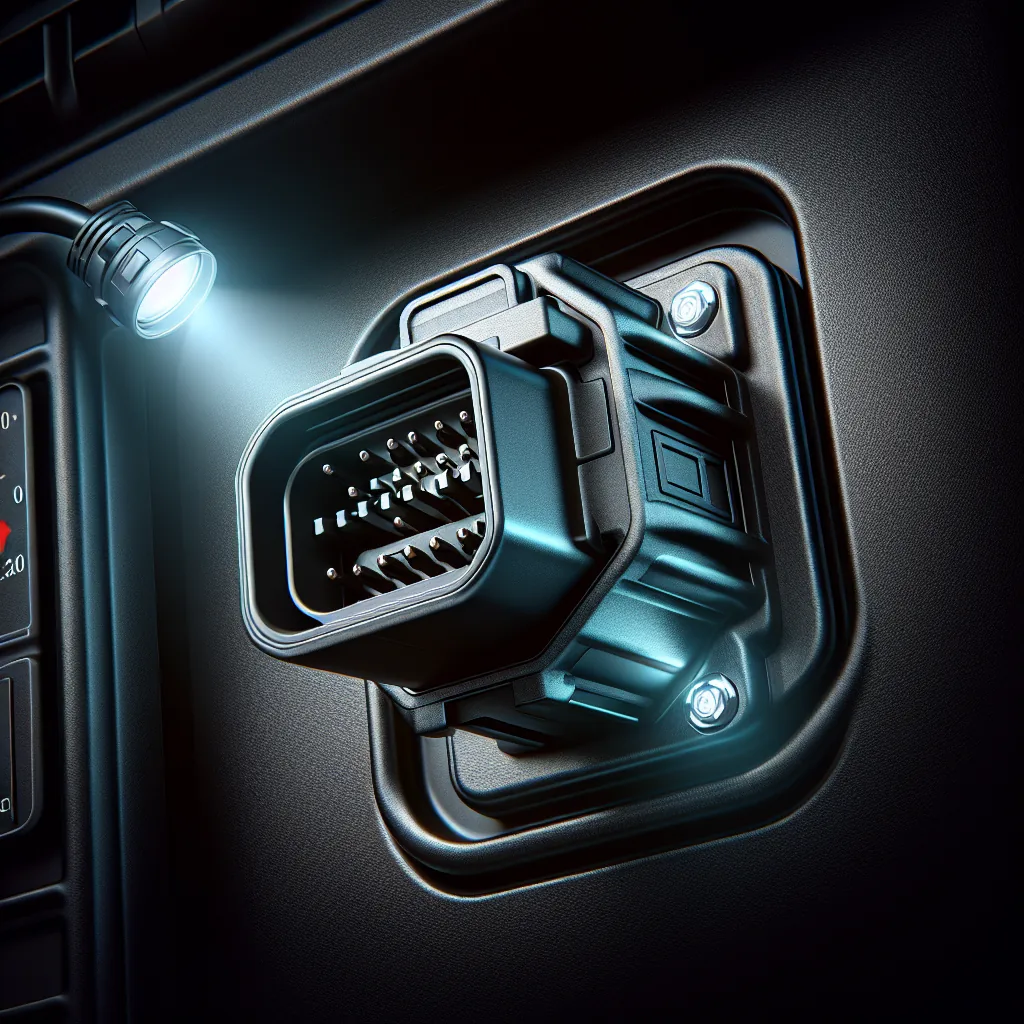
ERETH works with any commercial motor vehicle equipped with an engine control module (ECM) — which includes virtually all trucks manufactured from model year 2000 onward. The device connects through the standard J1939 9-pin diagnostic port or the OBDII 16-pin port, depending on the vehicle. No proprietary wiring harnesses or custom adapters are needed.
📱
Mobile App Integration
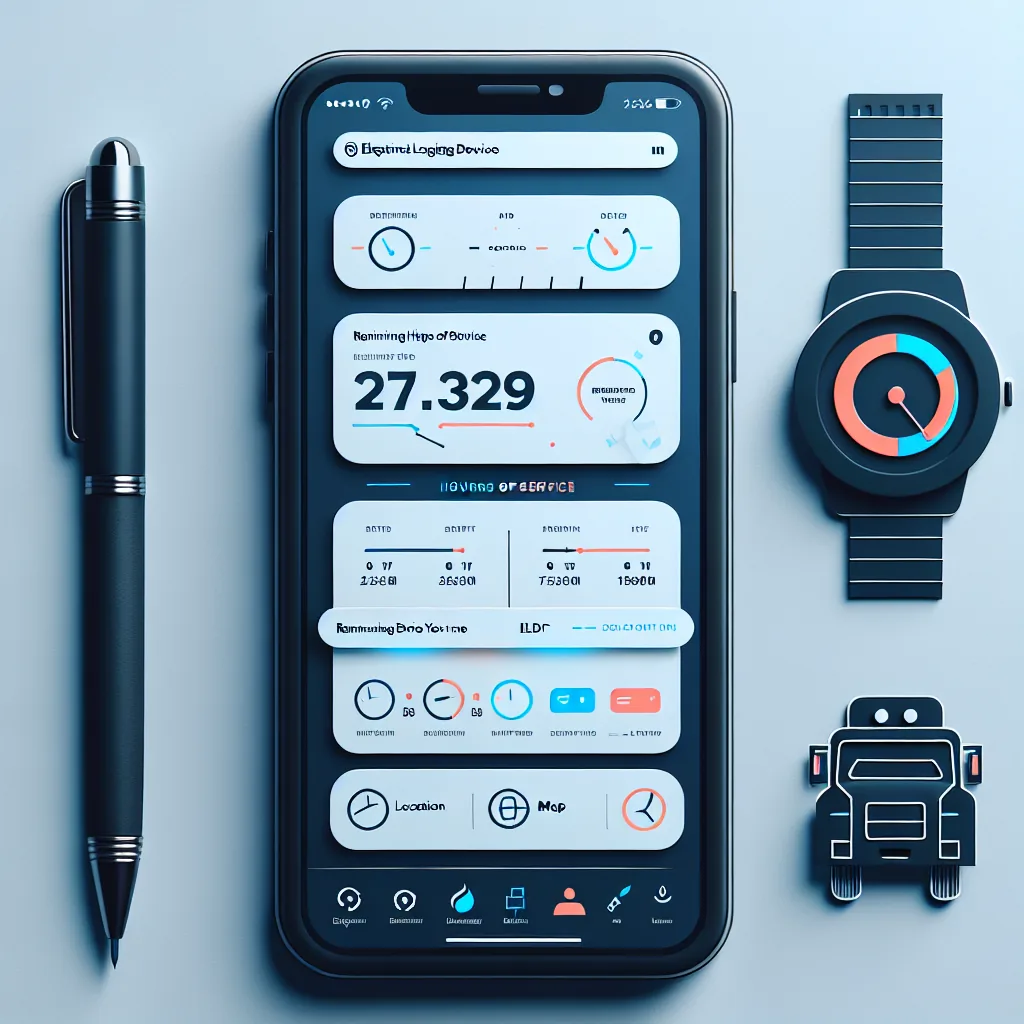
Drivers interact with ERETH through the VAU0 mobile application, available on both iOS and Android. The app displays current duty status, remaining drive time, HOS countdown timers, and violation warnings. Log edits, annotations, and certifications are all handled within the app. The device and app communicate via Bluetooth Low Energy for reliable, low-power connectivity.
🔒
Tamper-Resistant Design
ERETH cannot be disconnected or disabled without generating a diagnostic event and malfunction indicator. The device continuously monitors its own connection to the vehicle’s ECM and alerts both the driver and carrier if any interruption occurs. All data is cryptographically signed and stored redundantly, ensuring the integrity of log records even in the event of device loss or damage.
ELD OBD-II connection and data capture
🕑 Hours of Service
HOS Rules Made Simple

Federal hours of service regulations limit how long commercial drivers can operate before they must rest. ERETH tracks all of these limits automatically and warns drivers before they reach a violation threshold.

🕒
11 Hours
Driving Limit
After 10 consecutive hours off duty, a driver may operate a commercial motor vehicle for up to 11 hours. Once 11 hours of driving time have been used, the driver must take another 10-hour break before driving again. ERETH counts driving minutes precisely and displays remaining time on the dashboard.
🕛
14 Hours
On-Duty Window
The 14-hour clock starts the moment a driver goes on duty or begins driving, whichever comes first. All driving must be completed within this 14-hour window. Off-duty time does not pause or extend this clock — once it starts, it runs continuously. ERETH shows a countdown that makes this easy to track at a glance.
30 Minutes
Required Break
After 8 cumulative hours of driving without at least a 30-minute interruption, the driver must take a break of at least 30 minutes. This break can be spent off-duty or in the sleeper berth. ERETH monitors cumulative driving time and alerts the driver when the 30-minute break requirement is approaching.
📅
60/70 Hours
Weekly Limit
Carriers operating 5 days per week use a 60-hour/7-day limit. Those running 6–7 days use a 70-hour/8-day limit. These caps include all on-duty time, not just driving. ERETH calculates the rolling total automatically and shows exactly how many hours remain before the weekly cap is reached.
🔄
34-Hour
Restart Provision
A driver may reset the 60/70-hour clock by taking at least 34 consecutive hours off duty. After a valid 34-hour restart, the weekly clock resets to zero and the driver begins fresh. ERETH tracks restart eligibility and notifies the driver when the 34-hour threshold has been met.
🛌
Split Sleeper
Berth Provision
Drivers may split their required 10-hour off-duty period into two segments: one period of at least 7 hours in the sleeper berth and another period of at least 2 hours either off-duty or in the sleeper berth. ERETH handles split-sleeper calculations automatically, which are notoriously complex to compute manually.

📅 A Typical Driver’s Day

6:00 AM
Pre-Trip
On-Duty
6:30 – 10:30 AM
Driving
4 hours
10:30 AM
30-Min Break
Required
11:00 AM – 4:00 PM
Driving
5 hours
4:00 PM
Unload
On-Duty
5:00 – 7:00 PM
Driving
2 hours
7:00 PM
Off-Duty
10 hours

This example shows 11 hours of driving completed within a 13-hour on-duty window, with the required 30-minute break taken after the first 4 hours of driving. The driver then takes 10 consecutive hours off duty before starting the next day. ERETH visualizes this entire timeline in the driver’s app.

ERETH ELD mobile app showing HOS data
🔧 Hardware Setup
ELD Hardware Setup

Getting ERETH connected takes about five minutes. No tools, no wiring, no technician required. Here is the complete process from unboxing to verification.

1
Locate the Diagnostic Port
Find the vehicle’s diagnostic connector. On most heavy-duty trucks, this is a 9-pin round J1939 port located beneath the dashboard on the driver’s side. On lighter commercial vehicles, look for the standard 16-pin OBDII port, typically found under the steering column. The port provides both power and data to the ELD device.
2
Plug in the ERETH Device
Insert the ERETH ELD connector firmly into the diagnostic port. The device draws power from the vehicle’s electrical system through this connection — no separate power cable or battery is needed. A small LED on the device will illuminate solid blue to indicate it has powered on successfully and is reading engine data.
3
Pair via Bluetooth
Open the VAU0 mobile app on your smartphone or tablet. Navigate to ELD Settings and tap “Scan for Device.” The app will discover the ERETH unit within a few seconds. Tap the device name to pair. Bluetooth Low Energy is used for the connection, which consumes minimal battery on your mobile device and maintains a stable link within a 30-foot range.
4
Driver Logs In
The driver enters their credentials in the VAU0 app. The app associates the driver’s identity with the ELD device and begins a new log session. Multiple drivers can use the same device by logging in and out — each driver’s records are kept completely separate. Co-driver and team-driving configurations are fully supported.
5
Automatic Drive Detection
Once the vehicle reaches approximately 5 miles per hour, the ELD automatically changes the driver’s status to “Driving.” When the vehicle stops for 5 consecutive minutes, the device prompts the driver to confirm their new status. This automatic detection is required by FMCSA regulations and eliminates the possibility of forgetting to start or stop the driving clock.
6
Verify Connection
Check the dashboard indicator in the VAU0 app. A green icon confirms that the ELD is connected, receiving engine data, and recording properly. If you see an amber or red indicator, the app provides troubleshooting steps. In most cases, simply re-seating the connector in the diagnostic port resolves any issues. The entire setup from opening the box to a verified green indicator typically takes under five minutes.
No monthly hardware fees. The ERETH device is provided at no cost when you sign up for the VAU0 platform. There are no lease payments, no per-truck charges, and no activation fees through December 2026.
🚶 Inspections
What Happens at Roadside

Roadside inspections are a routine part of commercial driving. ERETH makes the ELD portion of an inspection smooth and fast. Here is exactly what happens when an officer asks to see your logs.

👮
1. Officer Requests ELD Data
The enforcement officer will ask the driver to present their electronic logs. With ERETH, the driver simply opens the VAU0 app and taps the “Inspection” button. This displays the current day’s log graph along with the previous 7 days, formatted exactly the way officers expect to see it.
📤
2. Data Transfer
If the officer requests an electronic transfer, the driver taps “Transfer” and selects either Web Services or Email. Web Services sends the data directly to the FMCSA’s eRODS system. Email sends a standardized output file to the officer’s address. Both methods transmit in seconds and generate a confirmation receipt.

Data Included in Every Transfer

📅
8 Days of Logs
Complete duty status records for the current day plus the previous 7 days
👤
Driver Info
Name, license number, issuing state, and co-driver information if applicable
🚚
Vehicle Info
VIN, unit number, odometer readings, and trailer information
🏢
Carrier Info
Carrier name, USDOT number, principal address, and home terminal details
ERETH passes all FMCSA technical requirements. The ELD output file conforms to Appendix A of the ELD rule (49 CFR Part 395), including all mandatory and optional data elements. Carriers using ERETH have experienced zero compliance rejections during roadside data transfers.
📋 Vehicle Inspections
DVIR Integration

Driver Vehicle Inspection Reports are a federal requirement before and after every trip. ERETH integrates DVIR directly into the ELD workflow so that inspections and HOS records stay connected.

Pre-Trip Inspection
Before driving, the driver completes a pre-trip DVIR through the VAU0 app. A guided checklist covers all federally required inspection points: brakes, tires, lights, mirrors, coupling devices, steering, horn, wipers, emergency equipment, and more. The completed report is timestamped, GPS-tagged, and linked to the driver’s ELD record for that day.
🌙
Post-Trip Inspection
At the end of the driving day, the driver completes a post-trip DVIR. This report documents the condition of the vehicle after the trip and identifies any new defects that may have developed during operation. Post-trip reports are especially important for team-driving operations where one driver needs to communicate vehicle condition to the next driver.
Defect Reporting
When a driver identifies a defect, they categorize it by severity in the app. Critical defects that affect safe operation — such as brake failures or tire damage — flag the vehicle as out of service until repaired. Minor defects are logged for maintenance scheduling. Photos can be attached to any defect report for documentation purposes.
🔧
Mechanic Sign-Off
Once a defect is repaired, a qualified mechanic certifies the repair through the VAU0 platform. The mechanic’s sign-off is digitally recorded with their name, timestamp, and description of the repair performed. This closes the defect loop and makes the vehicle available for dispatch. The complete defect-repair chain is stored for DOT audit readiness.
📝 Exemptions
Who Doesn’t Need an ELD?

While the ELD mandate applies to most commercial motor vehicle operators, several categories of drivers are exempt. If you fall into one of these groups, you are not required to use an ELD — though you may still benefit from using one voluntarily.

📍
Short-Haul Exemption
Drivers who operate within a 150 air-mile radius of their reporting location, report to and are released from the same location each day, and do not exceed the maximum on-duty period are exempt from the ELD requirement. These drivers must still maintain time records but may use manual timecards instead of an ELD.
🚗
Pre-2000 Model Year Vehicles
Vehicles manufactured before model year 2000 typically lack the engine control modules needed to interface with an ELD. Drivers operating these older vehicles are exempt from the ELD mandate. However, they must still maintain paper Records of Duty Status (RODS) and comply with all HOS regulations.
🌾
Agricultural Operations
Drivers transporting agricultural commodities or farm supplies within a 150 air-mile radius of the source of the commodities during the planting and harvesting seasons are exempt. This exemption recognizes the seasonal and time-sensitive nature of agricultural transportation.
🚛
Driveaway-Towaway
Drivers operating under driveaway-towaway operations — where the vehicle being driven is the commodity being delivered — are exempt from the ELD mandate. This includes delivering new trucks from the factory, towing vehicles for sale, and similar operations where the vehicle itself is the freight.
📈 Compare
ERETH vs Other ELDs

See how ERETH stacks up against the most popular ELD providers in the market. We built ERETH to deliver more features at a lower cost with zero long-term commitments.

Feature ERETH ELD Motive (KeepTruckin) Samsara BigRoad
Monthly Cost $0 through 2026 $25–$40/truck $27–$45/truck $10–$20/truck
Hardware Cost $0 (included) $100–$150 $100–$200 $100–$150
Contract Required No contract 3-year typical 3–5 year typical No contract
FMCSA Registered ERS238
Live GPS Tracking Included Extra cost Included Limited
DVIR Built-In
AI Dispatch Integration Full TMS + AI
IFTA Mileage Reporting Automatic Add-on
Setup Time < 5 minutes 15–30 minutes 30–60 minutes 10–15 minutes
Full TMS Included Complete TMS Separate product Separate product
📊 Dashboard
Your Compliance Dashboard

The ERETH compliance dashboard gives carriers and drivers a clear, real-time view of HOS status across the entire fleet. No guessing, no manual calculations, no surprises.

🟢
Current HOS Status
See every driver’s current duty status at a glance — driving, on-duty, sleeper, or off-duty. Color-coded indicators make it easy to spot who is available, who is close to their limits, and who is resting.
Violation Warnings
ERETH proactively alerts drivers and dispatchers when a violation is approaching. Warnings trigger at 30 minutes, 15 minutes, and 5 minutes before any HOS limit is reached, giving ample time to pull over and stop safely.
🕑
Remaining Drive Time
The dashboard shows remaining hours for the 11-hour driving limit, the 14-hour window, the 30-minute break requirement, and the 60/70-hour weekly cap — all updated in real time as the driver operates.
📅
8-Day History
View the complete log graph for any of the last 8 days. Each day shows a standard 24-hour grid with color-coded duty status blocks, exactly matching the format officers review during inspections.
🗺
Fleet-Wide Overview
Carriers with multiple trucks see a fleet summary showing all drivers sorted by available hours. This makes dispatch decisions easier — assign loads to drivers who have the most remaining time available.
📊
Compliance Score
A rolling compliance score tracks your fleet’s HOS adherence over time. Monitor trends, identify drivers who may need additional training, and maintain documentation that demonstrates a strong safety culture.
⚠ Compliance
Penalties Without an ELD

Operating without a compliant ELD carries serious consequences. Federal and state enforcement agencies actively check for ELD compliance during roadside inspections and audits.

$16,000+
Per Violation Fine
Each ELD violation can result in a fine of up to $16,000 or more. Multiple violations on a single inspection can compound, and repeat offenders face escalating penalties. These fines apply to both the driver and the carrier.
OOS
Out-of-Service Order
A driver found operating without a compliant ELD can be placed out of service for the remainder of the day. This means the truck sits idle, the load is delayed, and the carrier loses revenue. Repeated OOS orders can trigger a federal compliance review.
CSA
Safety Score Impact
ELD violations are recorded in the FMCSA’s Compliance, Safety, Accountability (CSA) system. High CSA scores make it harder to work with brokers and shippers, increase insurance premiums, and can trigger a full DOT compliance audit of your operation.
Don’t risk it. The cost of an ELD violation in a single inspection can exceed what you would spend on ELD service for an entire year. With ERETH, the cost is zero — there is no reason to operate without a compliant device.
🔗 Ecosystem
Related Features

ERETH ELD is one part of the integrated VAU0 platform. These features work together to give carriers a complete operations suite.
ERETH ELD — FMCSA compliant truck tracking
Get FMCSA-compliant today.
ERETH ELD is included free with every VAU0 account through December 2026. Set up in five minutes, stay compliant everywhere you drive.